"Are training pants and training underwear the same thing?" It's one of the most common questions we get from Aussie parents, and the answer matters because picking the wrong one for your toddler's actual stage is usually the reason toilet training stalls out.
Short version: they're not the same product, and they're not interchangeable. They're built for different moments in the journey. This guide breaks down what each one actually is, when to use which, and how to know it's time to switch.
The Short Version
If you only read one paragraph, this is it.
- Toilet Training Pants are Stage 2. They look like undies, but they're built like a slimline nappy underneath. Heavy absorbency for the messy early phase when accidents are frequent and full.
- Toilet Training Underwear is Stage 3. Real bamboo undies with a slim leakproof gusset hidden inside. Light absorbency for the "mostly dry, occasional miss" phase.
- Most parents end up needing both, just at different points. Start with training pants. Graduate to training underwear once accidents drop to one or two a day.
Now let's actually look at each.
What's the Actual Difference?
The shape is similar (both pull up and down like undies). The job is different.
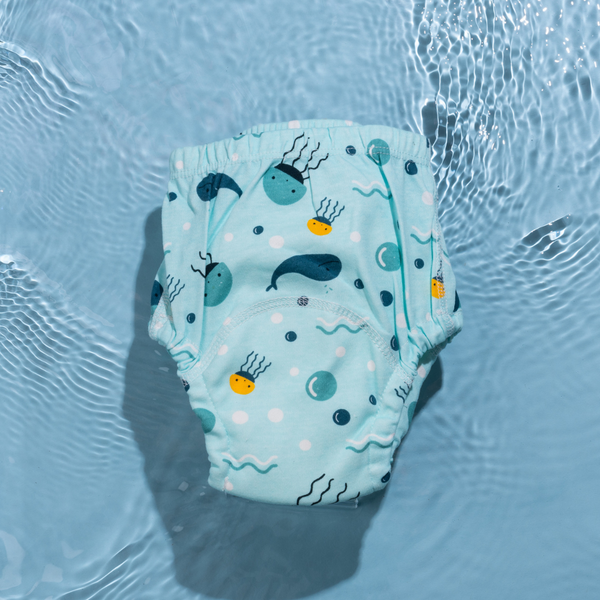
Training pants are a step away from nappies. The whole inside is absorbent, so they can hold a full accident without it ending up on the floor. The trade-off is they feel slightly thicker between the legs and your toddler can sometimes tell.
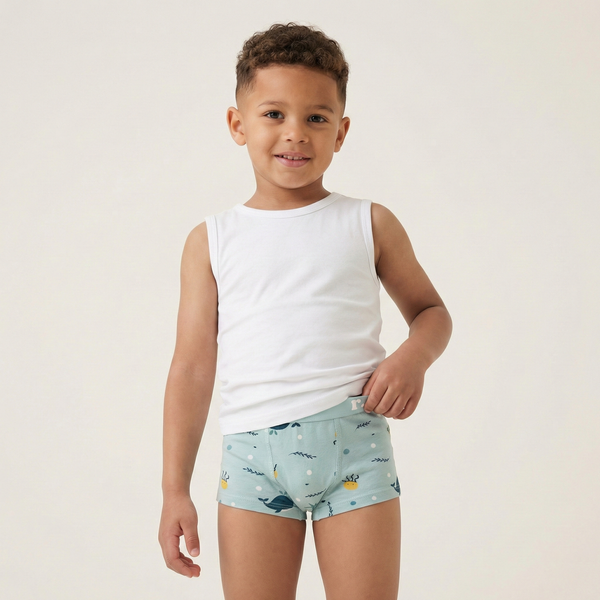
Training underwear is a step toward regular undies. Most of the garment is soft bamboo viscose just like real underwear, and only the small gusset between the legs has a thin absorbent layer. They feel like proper undies, but they'll catch a small miss without soaking through clothes.
If you're using training pants when accidents are already rare, you're slowing your toddler's confidence ("why does this still feel like a nappy?"). If you're using training underwear when accidents are still full and frequent, you'll be doing endless laundry and your toddler will hate the wet feeling.
Stage 2: Toilet Training Pants

Our Toilet Training Pants are what you reach for in the first weeks of training. They look like undies on the outside, but they're built to absorb a typical toddler accident in full.
What they're good for:
- The first few weeks of daytime training, when accidents happen multiple times a day
- Days out (shopping, parks, car trips) when you can't reach a toilet quickly
- Daycare or family sit if your toddler is still having multiple accidents a day
- Bridging the gap between pull-ups and "real" undies without the daily laundry mountain
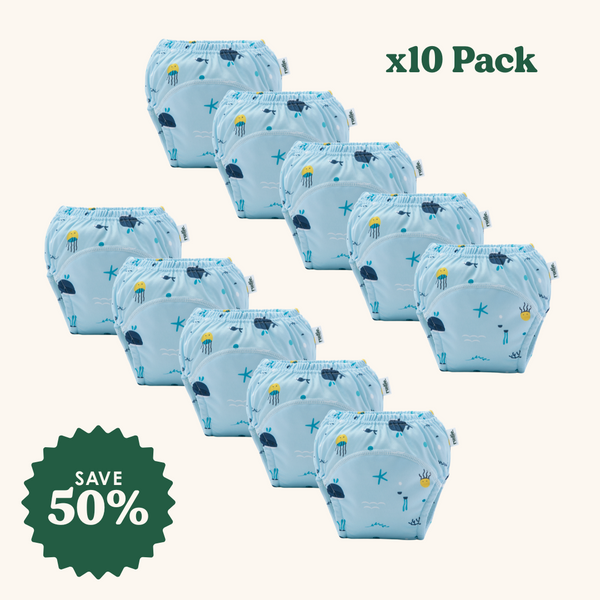
Sizing runs by weight: Small (5-13 kg), Medium (13-18 kg), Large (18-25 kg). Five prints available across the range (Whales, Unicorns, Fairytale, Watermelon, Giraffes), all unisex. Buy single pairs at $29 or save with the 10-pack at $101.
Reusable, machine washable at 40°, and the absorbent core lasts the full training period plus a younger sibling after.
"The first week was a write-off, accidents three times a morning. By week two she was telling me before she went. By week four we'd had two dry days in a row. The training pants gave her the space to learn without it being a disaster for me."
Sarah, PerthStage 3: Toilet Training Underwear

Our Toilet Training Underwear is what your toddler graduates into. It looks and feels like regular undies because mostly, it is. The whole body is 95% bamboo viscose. Only the slim gusset hides a 4-layer leakproof core that catches the odd small miss.
What it's good for:
- Toddlers who are mostly dry during the day but still have the occasional accident
- The "I'm a big kid now" psychological shift (cut from a Bonds boys trunk block, so the shape is one they already recognise)
- Daycare and preschool wear once your child is reliably using the toilet
- Building confidence before moving to plain cotton undies
Sizing runs by age: 2/3, 3/4, 4/6. Two prints (Whales, Unicorns), both unisex. Machine washable at 40°, PFAS-free, OEKO-TEX certified.
For the full deep dive on the 4-layer construction and how the sizing actually fits, see our Training Underwear Buying Guide.
"He didn't even know he had something different on. He just thought they were his regular undies, which was honestly the whole battle won."
Renee, BrisbaneSide by Side: Which Does Your Toddler Need Right Now?
| Training Pants (Stage 2) | Training Underwear (Stage 3) | |
|---|---|---|
| When to use | Early phase, multiple accidents a day | Late phase, mostly dry, occasional miss |
| Absorbency | Full pee plus small mess | Light, one small accident before the toilet |
| Look and feel | Slightly thicker undies, undie shape | Bamboo, feels like regular undies |
| Sizing | By weight (5-25 kg) | By age (2-6 years) |
| Price per pair | $29 (or $101 for 10-pack) | $24.95 (or $99.95 for 6-pack) |
| Use overnight? | Yes, paired with our leakproof Bed Guard or leakproof Fitted Sheet | Yes, paired with our leakproof Bed Guard or leakproof Fitted Sheet |
| Number of pairs needed | 6-10 to start (you'll wash daily) | 3-6 to start (you'll wash 1-2 times a week) |
The quick test: if your toddler is having 3+ full accidents a day, you're in Stage 2 territory. If they're at 1 or fewer per day and asking to go to the toilet most of the time, you're ready for Stage 3.
What About Overnight?
Both training pants and training underwear can be worn to bed as long as you've got a leakproof layer underneath. Here's the combo most Aussie families settle on:
- Training pants (Stage 2) + Bed Guard or Fitted Sheet: the pants do most of the work catching a full overnight wet, the leakproof layer catches anything that escapes. Good for the early months when your child is still adjusting to night dryness.
- Training underwear (Stage 3) + Bed Guard or Fitted Sheet: the slim gusset catches the small in-between misses, the leakproof layer is your insurance policy for the occasional bigger wet. Good for the "almost there at night" phase.
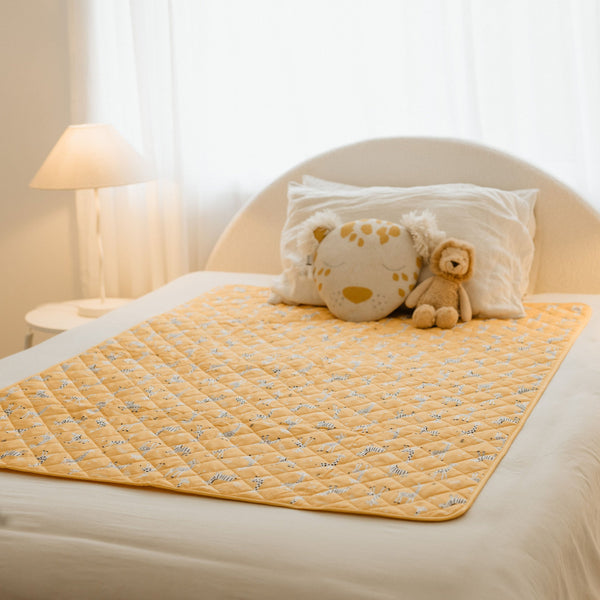
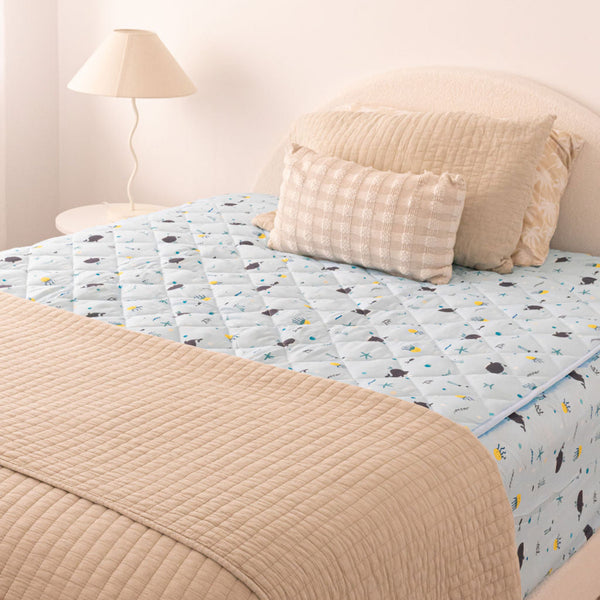
The leakproof Bed Guard sits on top of the existing sheet and is the easier set-up for visitors and travel. The leakproof Fitted Sheet replaces the sheet entirely and is a cleaner look for everyday use.
Night dryness is a separate developmental milestone from daytime training. For more on the timeline, see When to Stop Using Pull-Ups at Night.
How to Switch From Pants to Underwear (And When)
There's no exact day, but here's the pattern we see across thousands of Aussie families:
- Week 1-2: training pants all day. Accidents are still full and frequent. Your toddler is learning what "wet" feels like and starting to ask for the toilet.
- Week 3-4: training pants drop to "out of the house" only. At home, you might start using training underwear or going commando for short stretches.
- Week 5+: training underwear is the main rotation. Accidents are down to once a day or less. Training pants come out only for long car trips or if you're somewhere bathrooms are scarce.
- Week 8-12: regular cotton undies most of the day. Training underwear stays in the drawer for naps and the occasional unsettled week.
This timeline isn't a rule. Some kids skip Stage 2 entirely. Some take six months. The point of having both products is so you can match the product to where your toddler actually is, not where you wish they were.
For more on this, our 3-Stage Toilet Training System post walks through the full pull-ups to undies journey.
Where to Buy in Australia
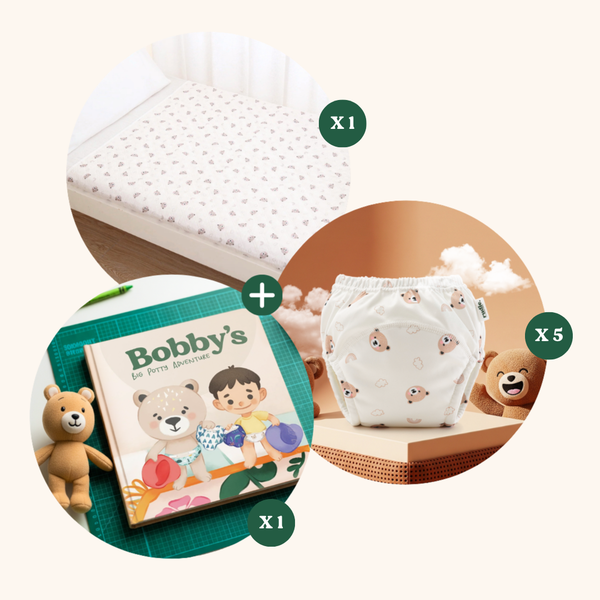
Both products ship from our Melbourne warehouse. If you order before 1pm on a weekday, they're usually on your doorstep within 2 to 4 business days. If you're starting toilet training from scratch and want to be ready for all three stages, our Bobby's Complete Toilet Training Bundle packs everything together at a saving.
Still not sure which one your toddler needs? Send us an email and we'll usually reply within a few hours during business days. We've helped 75,000+ Aussie families through toilet training and we've heard every version of the question.